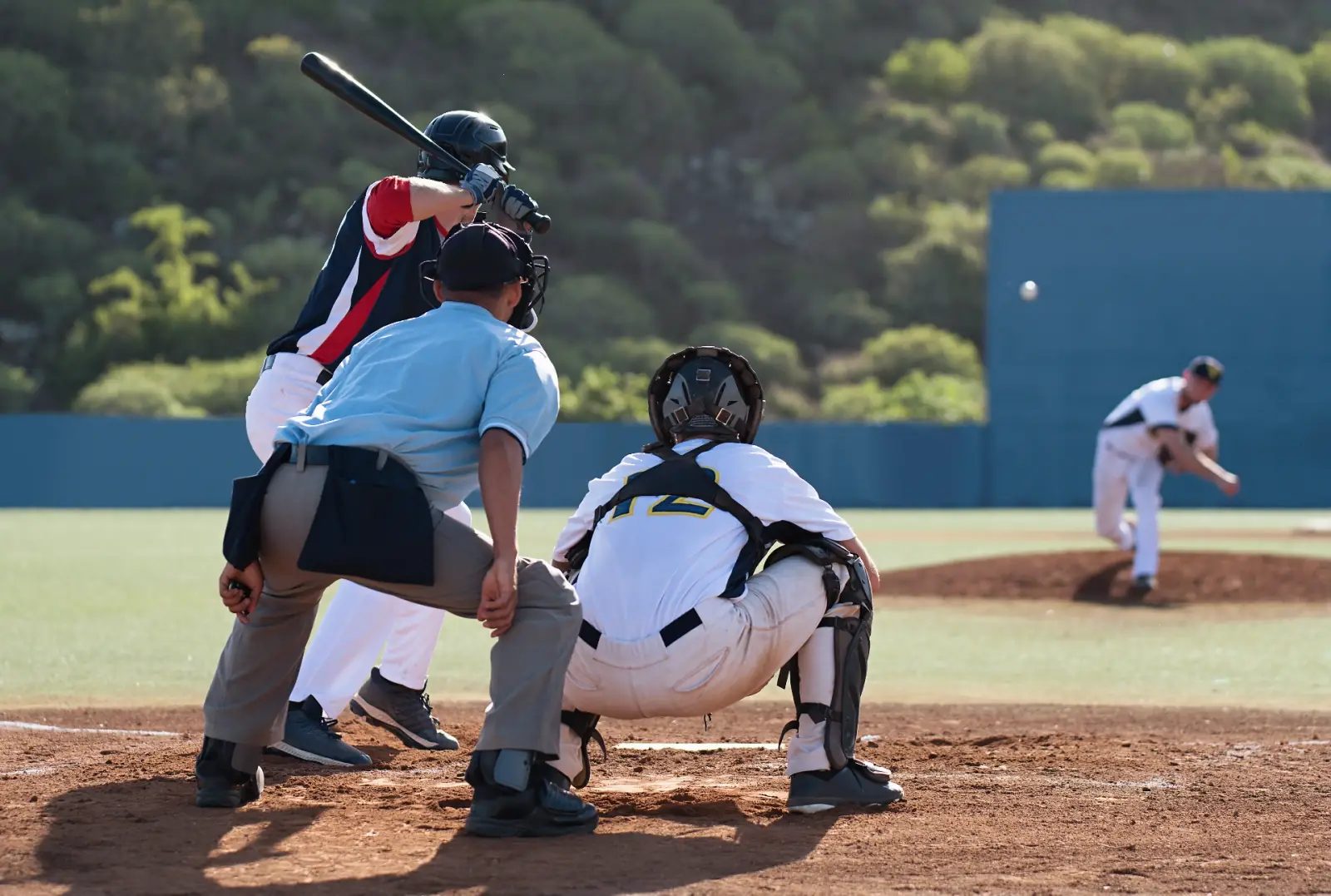
Understanding College Baseball Divisions
🏆 NCAA Division I
Highest level of college baseball with full athletic scholarships. Programs compete nationally with extensive travel and rigorous schedules.
Colorado has 2 D-I programs
⚾ NCAA Division II
Competitive programs with partial scholarships. Great balance of athletics and academics with regional competition focus.
Colorado has 8 D-II programs
🎓 NJCAA (Junior College)
Two-year programs offering athletic and academic development. Provides pathway to four-year schools with significant scholarships available.
Colorado has 5 NJCAA programs
Adams State University
Alamosa
NCAA Division II program in the beautiful San Luis Valley. Competes in the RMAC with focus on student-athlete development. High altitude training provides unique conditioning benefits.
View DetailsColorado Christian University
Lakewood
NCAA Division II program with a Christ-centered approach to athletics. Consistent RMAC contender with strong regional recruiting. Emphasis on character development alongside baseball excellence.
View DetailsColorado Mesa University
Grand Junction
Perennial NCAA Division II power and consistent RMAC champion. Located in Grand Junction on the Western Slope. Known for outstanding player development and competitive success at the regional and national level.
View DetailsNJCAA program offering two-year pathway to four-year opportunities. Small-town atmosphere with individual attention. Excellent option for players needing development time before D-I/D-II.
View DetailsColorado School of Mines
Golden
NCAA Division II program at a top engineering school. Perfect for student-athletes seeking elite academics alongside competitive baseball. STEM-focused education with RMAC competition.
View DetailsNCAA Division II powerhouse with consistent national rankings. Strong Southern Colorado recruiting base. Known for producing professional players and competing for RMAC titles annually.
View DetailsSuccessful NJCAA program with strong transfer record to four-year schools. Located in southeast Colorado with low cost of living. Excellent stepping stone for college baseball careers.
View DetailsNCAA Division II program located in downtown Denver. Unique urban campus setting with access to professional facilities. Strong pathway for Denver metro prep players.
View DetailsNortheastern Junior College
Sterling
Elite NJCAA program and consistent Region IX contender. Outstanding track record of placing players at four-year schools. Strong coaching staff with professional connections.
View DetailsOtero College
La Junta
NJCAA program in southeast Colorado offering two-year pathway. Affordable education with competitive baseball. Individual attention and development focus.
View DetailsRegis University
Denver
NCAA Division II Jesuit university with strong academic tradition. Small class sizes and personalized attention. Competitive in the RMAC with focus on whole-person development.
View DetailsTrinidad State College
Trinidad
NJCAA program in southern Colorado offering affordable pathway to four-year baseball. Small class sizes and personalized coaching. Rebuilding program with opportunity for immediate impact.
View DetailsUnited States Air Force Academy
Colorado Springs
NCAA Division I program competing in the Mountain West Conference. Unique opportunity to combine elite athletics with world-class education and military leadership training. Players earn a degree while serving their country.
View DetailsUniversity of Colorado Colorado Springs
Colorado Springs
NCAA Division II program in Colorado Springs with excellent facilities and competitive tradition. Strong ties to local prep programs. Growing program with national tournament aspirations.
View DetailsNCAA Division I program and the alma mater of Rockies legend Todd Helton. Competing in the Summit League with a commitment to developing well-rounded student-athletes. Strong academic support and professional development pathway.
View DetailsShowing 1-15 of 15 results
College Recruiting Timeline
When to do what in your recruiting journey. The process starts earlier than most families expect.
Freshman (9th)
- •Focus on academics—GPA matters more than stats at this stage
- •Play multiple sports to develop athleticism
- •Start building a list of target schools
- •Attend local showcases to get baseline measurements
Coach's Take: Coaches rarely recruit freshmen. Focus on development and keeping grades up.
Sophomore (10th)
- •Create a recruiting profile on NCSA, PrepBaseballReport, and Perfect Game
- •Begin sending introductory emails to college coaches
- •Take the PSAT—NCAA eligibility requires standardized tests
- •Attend college camps to get on coaches' radars
Coach's Take: This is when D1 coaches start building their prospect lists. Get your name out there.
Junior (11th)
- •Peak recruiting year—this is when most offers happen
- •Take SAT/ACT early (fall) to have scores ready
- •Attend showcases: Perfect Game, PBR, Area Code Games
- •Schedule unofficial visits to top schools
- •Create and send updated highlight videos
Coach's Take: D1 coaches can contact you starting June 15 after sophomore year. Be ready.
Senior (12th)
- •Sign NLI during early or regular signing period
- •Complete NCAA Eligibility Center registration
- •Continue performing—coaches watch senior stats
- •If unsigned, explore JUCO options (no signing deadlines)
Coach's Take: D2/D3/JUCO recruiting continues year-round. Don't give up if D1 doesn't work out.
What Coaches Look For: Target Metrics by Division
| Metric | NCAA D1 | NCAA D2 | NJCAA |
|---|---|---|---|
| 60-yard dash | 6.4-6.8 sec | 6.8-7.1 sec | 7.0-7.4 sec |
| Exit velocity | 90+ mph | 85-90 mph | 80-85 mph |
| Fastball (RHP) | 88+ mph | 83-87 mph | 80-85 mph |
| Pop time (C) | 1.9-2.0 sec | 2.0-2.1 sec | 2.1-2.2 sec |
* These are general guidelines. Coaches also evaluate projectability, makeup, and fit.
Scholarship & Eligibility Guide
Understanding what's available at each level helps families plan financially and set realistic expectations.
NCAA Division I
Scholarships
11.7 per team
Type
Equivalency (can split)
- •Only 11.7 scholarships split among ~35 players
- •Most players receive partial scholarships (25-50%)
- •Full rides are rare—usually for elite pitchers or position players
- •Academic money can stack with athletic scholarships
- •Cost of attendance now included in scholarship calculations
NCAA Division II
Scholarships
9.0 per team
Type
Equivalency (can split)
- •9.0 scholarships split among ~30-35 players
- •Often more generous per-player than D1
- •Strong academic programs can add significant aid
- •Less travel, more regional competition
- •Great balance of athletics and academics
NCAA Division III
Scholarships
No athletic scholarships
Type
Academic & Need-Based Only
- •No athletic scholarships allowed
- •Strong academic and need-based aid available
- •Many private D3 schools have generous financial aid
- •Focus on student-athlete experience
- •Often more playing time opportunities
NJCAA (JUCO)
Scholarships
24 per team (D1)
Type
Full scholarships available
- •More scholarships available per roster spot
- •Full scholarships much more common than 4-year schools
- •Pathway to 4-year programs after 2 years
- •Lower academic requirements for initial eligibility
- •Great development option for late bloomers
Academic Eligibility Requirements
NCAA D1 & D2
- ✓Register with NCAA Eligibility Center
- ✓Complete 16 core courses (4 English, 3 Math, 2 Science, etc.)
- ✓Minimum 2.3 GPA in core courses (D1) or 2.2 (D2)
- ✓Meet sliding scale SAT/ACT requirements
- ✓Graduate high school
NCAA D3
- ✓No NCAA Eligibility Center registration required
- ✓Must be admitted to the school academically
- ✓Meet institutional admission requirements
- ✓Maintain satisfactory academic progress
NJCAA
- ✓Graduate high school or obtain GED
- ✓No standardized test requirements
- ✓2.0 GPA recommended but varies by school
- ✓Open enrollment at most institutions
💡 The Reality of Baseball Scholarships
Less than 2% of high school baseball players receive any athletic scholarship money. Most college baseball players pay a significant portion of their education.
Academic scholarships matter: Many players combine athletic and academic aid to reduce costs. Strong grades can be worth more than your batting average.
JUCO is a legitimate path: Many MLB players started at junior colleges. If D1 offers aren't coming, JUCO provides development time and a second chance at 4-year recruitment.
How to Contact College Coaches
First impressions matter. Here's how to reach out professionally and effectively.
Email Template
How to write your first email to a college coach
- •Subject line: [Position] [Grad Year] [Name] – [High School, State]
- •Keep it brief—coaches read hundreds of emails
- •Include: GPA, test scores, key stats, upcoming events
- •Attach schedule so coaches can come watch
- •Link to video (don't attach large files)
Example: Subject: RHP 2026 John Smith – Cherry Creek HS, CO
Video Guidelines
What coaches want to see in your highlight video
- •Keep it under 3 minutes total
- •Start with measurables and contact info
- •Show variety: game footage + skills work
- •Include defensive plays, not just hitting
- •Pitchers: show all pitches from multiple angles
Example: Upload to YouTube (unlisted) or Hudl for easy sharing
Recruiting Profile
Essential information every profile needs
- •Current contact info (email, phone, address)
- •Academic info: GPA, class rank, SAT/ACT scores
- •Athletic stats: measurables, season stats, showcase results
- •Schedule: high school season, travel team, showcases
- •References: travel coach, HS coach contact info
Example: Create profiles on NCSA, Perfect Game, and Prep Baseball Report
Colorado Recruiting Resources

Transform Your Swing.
Unlock Your Power.
Professional hitting lessons designed to develop elite-level mechanics, bat speed, and game-changing power — start with a free swing assessment.
Pro-level swing development
Maximize exit velocity
Hit with authority
hit4power.com